


Understanding the surface charge of particles is essential in various fields, from pharmaceuticals to environmental science. Electrophoretic mobility, a powerful analytical technique, offers valuable insights into particle behavior.
This article explores the fundamentals of electrophoretic mobility electrophoretic mobility, factors affecting particle movement, and its applications in biomedical research. By delving into this topic, readers will gain a deeper appreciation for the significance and advantages of using electrophoretic mobility to reveal particle surface charge.
Key Takeaways
- Charged particles move towards oppositely charged electrodes in an electric field, revealing their surface charge.
- Determining surface charge is crucial for applications in colloid science, pharmaceuticals, and environmental monitoring.
- Particle surface charge plays a critical role in biomedical research, affecting drug delivery systems and interactions with biological systems.
- Understanding factors like size, shape, charge magnitude, and medium properties is essential in interpreting particle movement and surface charge using electrophoretic mobility analysis.

The Basics of Electrophoretic Mobility
The understanding of electrophoretic mobility hinges on fundamental principles of charged particles’ movement in an electric field. When a charged particle is placed in an electric field, it experiences a force that propels it towards the oppositely charged electrode. This movement is influenced by the particle’s charge, size https://laballiance.com.my/, shape, and the properties of the surrounding medium.
Electrophoretic mobility, expressed as the velocity of the particle per unit electric field strength, provides valuable insights into the surface charge of particles. By measuring the electrophoretic mobility of particles, researchers can determine their surface charge, aiding in various applications such as drug delivery systems, environmental monitoring, and nanoparticle synthesis.
Understanding the basics of electrophoretic mobility is essential for harnessing its potential in diverse fields.
Factors Influencing Particle Movement
Exploring the intricacies of electrophoretic mobility, various factors influence the movement of charged particles in an electric field. The size and shape of particles play a crucial role, with smaller particles experiencing greater mobility due to less friction.
Additionally, the magnitude of the charge on the particle directly affects its movement, as particles with higher charges exhibit faster migration. The medium through which particles move also influences their mobility, with viscosity and pH impacting the speed and direction of migration.
Furthermore, external factors such as temperature and applied voltage can alter particle movement significantly. Understanding these factors is essential in manipulating electrophoretic mobility for various applications in research and industry.
Determining Surface Charge Sign
One key aspect in determining the surface charge sign of particles is the analysis of their electrophoretic mobility behavior. By observing the direction of particle movement under an electric field, it is possible to ascertain whether the surface charge is positive or negative. Positively charged particles will move towards the cathode, while negatively charged particles will migrate towards the anode.
This phenomenon is crucial in various fields such as colloid science, pharmaceuticals, and environmental monitoring. Understanding the surface charge sign of particles provides valuable insights into their behavior and interactions in different mediums. By leveraging electrophoretic mobility as a tool, researchers can unravel the intricate nature of particle surface charges, aiding in the advancement of numerous scientific disciplines.
Applications in Biomedical Research
How does the knowledge of particle surface charge sign obtained through electrophoretic mobility analysis shape advancements in biomedical research?
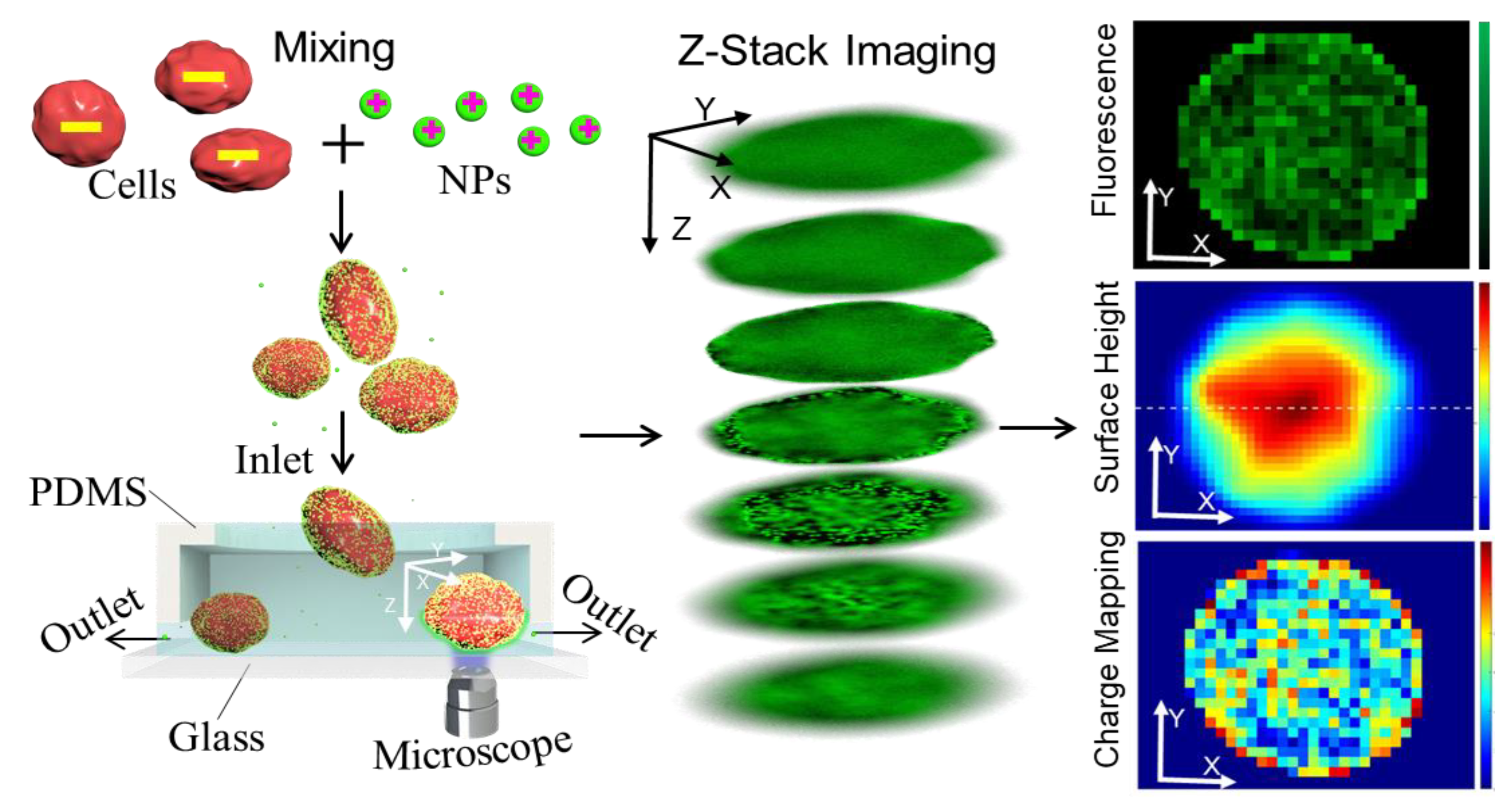
Understanding the surface charge of particles is crucial in drug delivery systems, as it influences interactions with biological systems.
Positively charged particles can target negatively charged cell membranes, enhancing drug uptake. In contrast, negatively charged particles may evade immune detection and have prolonged circulation times in the body.
Additionally, the surface charge of particles plays a role in cellular uptake mechanisms and intracellular trafficking pathways.
Advantages Over Traditional Techniques
In comparison with traditional methods, electrophoretic mobility analysis offers distinct advantages for determining particle surface charge. Unlike conventional techniques such as zeta potential measurements or titration methods, electrophoretic mobility provides real-time measurements without the need for complex sample preparation.
Additionally, electrophoretic mobility analysis can be performed on a wide range of particle sizes and concentrations, making it a versatile tool for various applications. The method also allows for high sensitivity, enabling the detection of subtle changes in surface charge that might be missed by other approaches.
Conclusion
In conclusion, electrophoretic mobility is a valuable technique for determining particle surface charge in various fields, including biomedical research.
By measuring the movement of charged particles in an electric field, scientists can infer the sign of the surface charge and gain insights into the behavior of colloidal systems.
This method offers advantages over traditional techniques, making it a powerful tool for studying and characterizing particles at the nanoscale level.


